Disagreements are everywhere.
You argue with your parents about getting a new phone, or whether hitting the gym is worth it, or if posting on Instagram is really necessary. With your partner, you don’t always agree on what love should look like. At work, you sometimes clash with your boss about how things should be done. These moments can leave you frustrated or misunderstood, thinking, “They just don’t get it,” while they feel the same way about you. Sometimes, it turns personal and leaves a mark. You either stay quiet and let frustration build, or you speak up and risk being called “disrespectful” or “too modern.”
This happens with everyone!
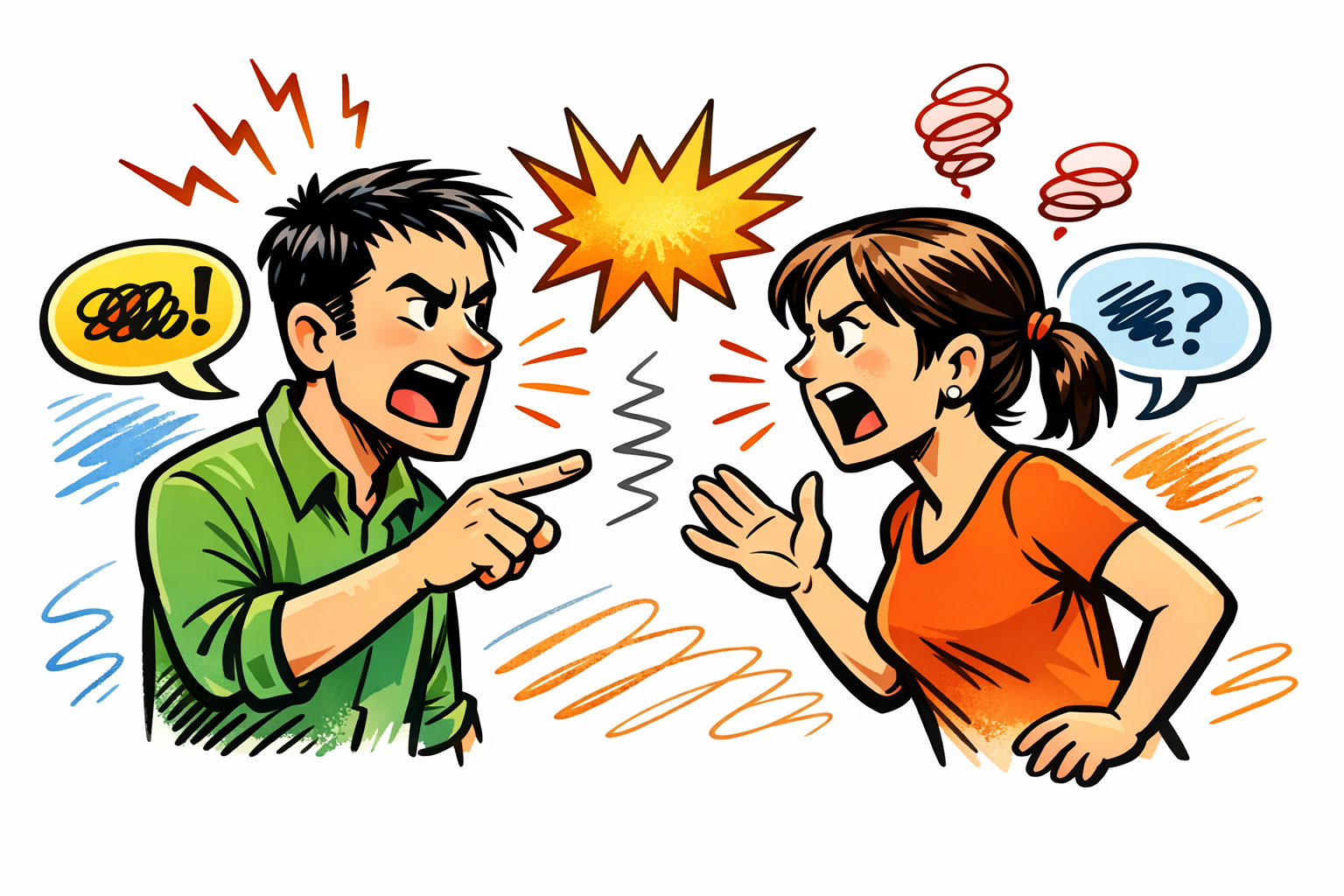
Disagreements are actually good!
While disagreements can feel frustrating or uncomfortable in the moment, they’re actually valuable. When you clash with someone, whether it’s your parent, partner, or a colleague, it can be tempting to dig in your heels or defend your view at all costs. But disagreement is an opportunity: it pushes you to question your own assumptions, consider why someone else sees things differently, and, if you let it, to see the world through their eyes.
Fights, resentment, and broken trust can be real risks if things go wrong. But if handled well, that same friction can actually keep ideas fresh and deepen understanding on both sides. The goal isn’t to avoid disagreement, but to avoid letting it turn destructive and instead, use it for growth.
Why do we disagree?
Mostly because people see things differently. Everyone’s got their own lens, their own take on how the world works and what actually helps in life. Those opinions come from the world they’ve perceived and the experiences they’ve had, good or bad. People come from different backgrounds and different challenges from childhood; they build their value system from the challenges they faced, the interactions they had, the mentors who guided them. Take money. Someone who grew up watching their family scrape by might value saving every rupee and see a big vacation as reckless; someone who grew up with more security might value experiences and see that same trip as investing in life. A parent who held one job for thirty years might see switching companies as disloyal; their kid, in a world where job-hopping is often the only way to get a raise, might see it as the only sensible move. Same topic, different lenses and both make sense when you know where they’re coming from.
How do you actually get through a disagreement without damaging the relationship? How do you stand your ground, say what matters to you, and still keep the doors of conversation open?
So, like anyone looking for answers, I went searching for advice. Most of what I found sounded familiar: “Put yourself in their shoes.” “Show empathy.” “Be compassionate.” It all felt a little… light. In theory, sure, it’s nice. But in the heat of an argument when tempers flare or you feel misunderstood, what does “be empathetic” actually look like? I realized I didn’t know, and I doubt many of us do. The typical advice isn’t concrete or actionable enough. We follow it in our own minds and wind up convinced that we’ve done our bit. When things still go sideways, it’s easy to shrug and say, “Well, I tried. They just didn’t get it.”
But here’s the twist: often, it’s not that the other person didn’t understand your efforts; it’s that you didn’t show your intention as clearly as you thought.
Why do we fall into this trap? Science actually has answers there are a handful of sneaky biases that trip us up:
- Self-serving bias: We see our own actions as coming from good intentions (“I did my best!”), but chalk up the other person’s reaction to their flaws (“They’re just being difficult.”). It protects our ego, but hides our blind spots like when we don’t communicate as well as we think.
- Illusion of transparency: We assume others can see what we’re thinking and feeling how much we care, or how hard we’re trying, even though we rarely spell it out. The reality? People are pretty bad at mind reading.
- Fundamental attribution error: When things go wrong, we explain their behavior by their personality (“They’re rude”) and our own by circumstances (“I was just stressed”).
- Curse of knowledge: Once we know our intent, we forget others aren’t inside our head making us skip over key details or explanations.
Recognizing these traps isn’t just a nerdy psychology exercise. Understanding them helps you see where communication really breaks down so you can start building actual bridges, not just wishful thinking.
Where do we fail?
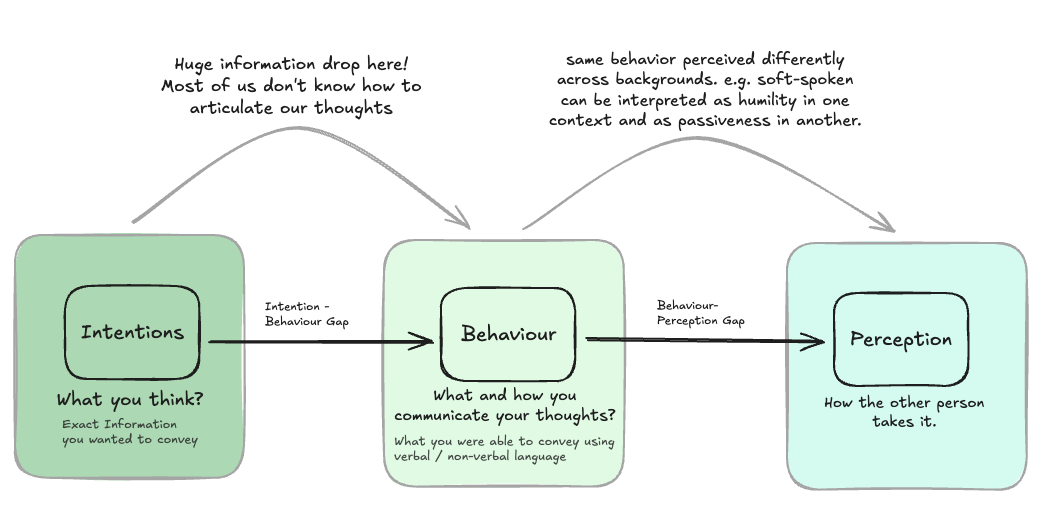
If we model where things go wrong, why disagreements still blow up even when we mean well. Two gaps show up. Both sit between you and the other person. Both are fixable once you see them.
Intent is not enough.
You’ll hear it everywhere: Intent is everything. If you act with good intent, you’re bound to succeed. I don’t buy it. (Niyat / Intention matters but it’s not the whole story.) The inverse feels closer to the truth: bad intent usually leads to bad outcomes, but good intent does not guarantee good results. Something else has to bridge the distance between what you mean and what actually lands.
Gap 1: Intention → Behaviour.
Say you want to give constructive criticism so the other person can improve. That intention lives entirely in your head. They can’t see it. They only see what you do, your words, your tone, your body language. Not everything we think comes out clearly. So there’s a first gap: between what you intend and how you behave. Organisations know this. That’s why they write codes of conduct they’re trying to make “good intentions” visible by defining the behaviours that signal them. Your behaviour is the only channel the other person has.
Gap 2: Behaviour → Perception.
Even when your behaviour is clear, it still has to pass through their lens. People bring different backgrounds, biases, and norms. The same behaviour can be read in opposite ways. Working across India and then abroad made this obvious to me: some of my German colleagues are so direct and critical that their normal comments can feel like a personal attack. My British colleagues are so diplomatic that their casual, friendly chat can be the moment they’re actually giving you serious feedback. Same behaviour, different perception. That’s the second gap, between what you do and how it’s received.
What actually helps.
If you want to disagree respectfully and have your views heard, you have to close these two gaps. Not in one conversation but in repeated ones. Over time you learn each other’s behaviour and perception patterns. You make an active effort to understand how they “hear” you, and they learn how you “speak.” That’s when disagreements stop feeling like clashes and start feeling like dialogue.
Alas! Embrace this quote:
When you disagree, do so without being disagreeable. - Benjamin Franklin
So far we’ve looked at why disagreements happen and where we fail. Next, I want to share concrete ways to disagree on what works, what doesn’t, and how to make the IBP gaps smaller in practice. That’s How to Disagree, Part II (coming soon). I’ve jotted down a few good and bad approaches; the why and where had to come first so the how makes sense. If you disagree with how to disagree or have tricks that work for you, I’d love to hear! I’m still learning. Your take will help me and others get better at this.